
Have you ever experienced a toothache during a cold, allergy flare-up, or sinus infection and wondered whether the problem was actually your teeth? You’re not alone. Many people are surprised to learn that sinus issues can sometimes mimic dental pain, making it difficult to determine the true source of discomfort.
Because the upper teeth are located very close to the sinus cavities, inflammation or pressure in the sinuses can create sensations that feel remarkably similar to a toothache. Understanding the connection between sinus health and dental pain can help you seek the right treatment and avoid unnecessary worry.
Understanding the Connection Between Sinuses and Teeth
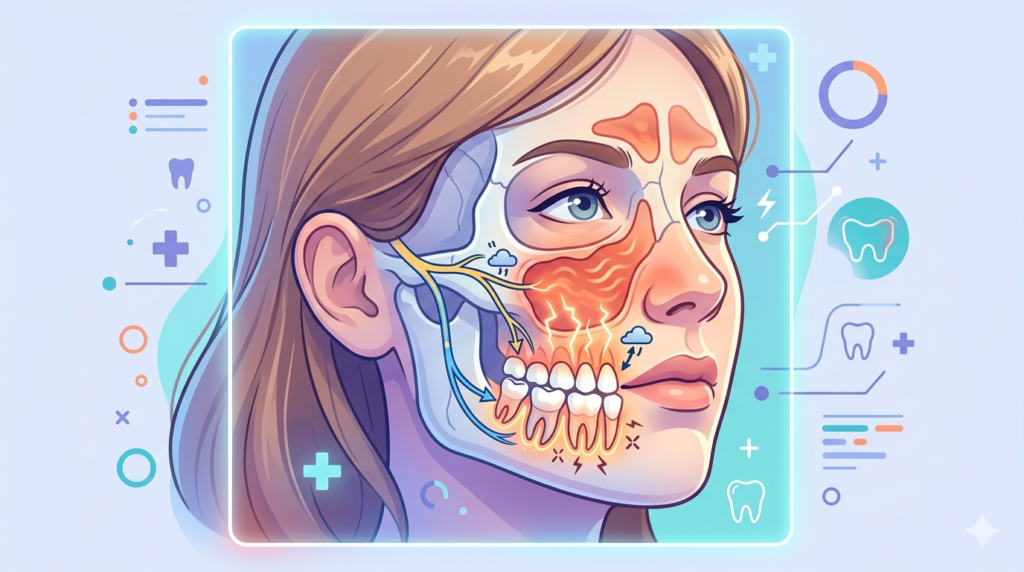
Your sinuses are air-filled spaces located within the bones of your face. The maxillary sinuses, which are the largest sinus cavities, sit directly above your upper back teeth and roots.
In some individuals, the roots of the upper molars and premolars are located very close to the sinus floor. Because of this close relationship, pressure, inflammation, or infection within the sinuses can affect nearby nerves and create pain that feels like it’s coming from the teeth.
This phenomenon is often referred to as “referred pain,” meaning the source of the pain is different from where it is felt.
How Sinus Problems Cause Tooth Pain
When the sinuses become inflamed due to allergies, colds, respiratory infections, or sinusitis, the tissues inside the sinus cavities swell and fill with mucus.
This increased pressure can place stress on the nerves surrounding the upper teeth, resulting in symptoms such as:
- Aching upper teeth
- Pressure in the cheeks or upper jaw
- Sensitivity when chewing
- Facial discomfort
- A feeling of fullness around the nose and eyes
Unlike a typical toothache caused by decay or infection, sinus-related tooth pain often affects several upper teeth at the same time rather than one specific tooth.
Common Sinus Conditions That Can Trigger Tooth Pain
Sinus Infections (Sinusitis)
A sinus infection can cause significant inflammation and pressure within the maxillary sinuses. As pressure builds, pain may radiate into the upper molars and surrounding jaw area.
Seasonal Allergies
Allergies can lead to sinus congestion and swelling, which may result in mild to moderate tooth discomfort, especially during allergy seasons.
Common Cold or Flu
Respiratory illnesses often cause temporary sinus congestion. Many people notice tooth sensitivity or upper jaw pressure while recovering from a cold.
Chronic Sinus Problems
Individuals with ongoing sinus inflammation may experience recurring episodes of facial pain and tooth discomfort that can be mistaken for dental problems.
How to Tell the Difference Between Sinus Pain and a Toothache
Because the symptoms can overlap, distinguishing between sinus-related pain and a true dental problem can be challenging.
Signs the pain may be sinus-related include:
- Pain affecting multiple upper teeth
- Nasal congestion or a runny nose
- Facial pressure around the cheeks and eyes
- Headaches or sinus pressure
- Pain that worsens when bending forward
- Recent cold, allergies, or sinus infection
Signs the pain may be dental-related include:
- Pain isolated to a single tooth
- Sensitivity to hot, cold, or sweet foods
- Swollen gums
- Visible tooth damage or decay
- Persistent pain without sinus symptoms
- Pain when biting down on a specific tooth
If you’re unsure, a dental examination can help determine the true cause of the discomfort.
Why a Dental Visit Is Still Important
Even if you suspect your pain is caused by sinus issues, it’s important not to ignore it. Some dental infections can produce symptoms similar to sinus problems, and in certain cases, a tooth infection can even spread into the sinus cavity.
Your dentist can perform a thorough examination, take diagnostic images if necessary, and rule out conditions such as:
- Cavities
- Tooth abscesses
- Cracked teeth
- Gum disease
- Root infections
Once dental causes have been eliminated, your dentist may recommend consulting your physician or an ear, nose, and throat (ENT) specialist for further evaluation.
Managing Sinus-Related Tooth Pain
If sinus congestion is causing your discomfort, treating the underlying sinus issue often relieves the tooth pain as well.
Helpful measures may include:
- Staying hydrated
- Using saline nasal rinses
- Managing allergies effectively
- Using prescribed medications as directed by your healthcare provider
- Getting adequate rest during illness
As sinus pressure decreases, the associated tooth discomfort usually improves.
Yes, sinus problems can absolutely feel like tooth pain. Because the upper teeth and maxillary sinuses are closely connected, inflammation and pressure within the sinuses can create symptoms that closely resemble a dental issue.
However, it can be difficult to tell the difference between sinus-related discomfort and a true tooth problem without a professional evaluation. If you’re experiencing persistent tooth pain, facial pressure, or unexplained oral discomfort, schedule an appointment with your dentist. Identifying the correct source of the pain is the first step toward finding lasting relief and protecting your oral health.