
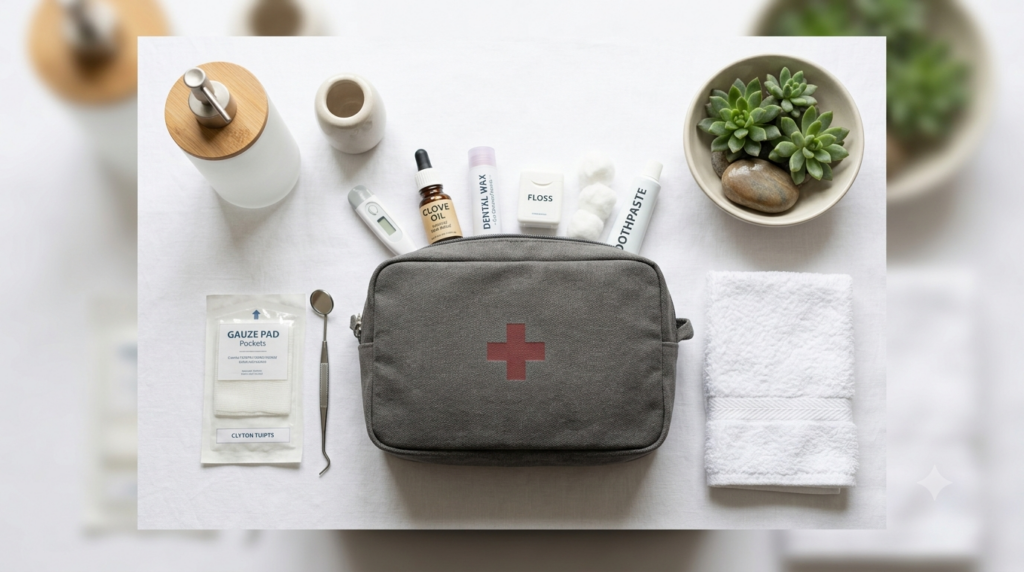
Dental emergencies can happen when you least expect them—a chipped tooth during dinner, a knocked-out tooth while playing sports, or sudden tooth pain in the middle of the night. While an emergency dental kit won’t replace professional treatment, having the right supplies at home can help you manage the situation until you can see your dentist.
A well-stocked emergency dental kit can reduce discomfort, protect an injured tooth, and improve the chances of a successful treatment. Here’s what every household should keep on hand.
Why Keep an Emergency Dental Kit?
Just as you have a first-aid kit for cuts and burns, a dental emergency kit helps you respond quickly to oral injuries. Taking the right steps in the first few minutes after a dental emergency can make a significant difference, especially if a tooth has been knocked out or damaged.
Having essential supplies readily available can also help relieve pain and prevent further injury while you arrange professional dental care.
Essential Items for Your Emergency Dental Kit
Sterile Gauze Pads
Gauze is useful for controlling bleeding after a dental injury or extraction. It can also help protect an injured area until you receive treatment.
Disposable Gloves
Wearing clean disposable gloves helps reduce the risk of introducing bacteria when handling an injured tooth or assisting someone with a dental emergency.
Small Container with Lid
If a tooth is knocked out, you’ll need a clean container to safely transport it. Ideally, place the tooth in milk or a tooth preservation solution if available. Never store it dry.
Saline Solution
Sterile saline can be used to gently rinse a knocked-out tooth or clean minor oral injuries without causing additional irritation.
Dental Wax
Dental wax is especially helpful if you wear braces. It can cover broken brackets or protruding wires that may irritate your cheeks or gums.
Cold Pack
An instant cold pack helps reduce swelling and relieve pain caused by dental injuries, facial trauma, or jaw discomfort.
Pain Relievers
Over-the-counter pain medications, such as acetaminophen or ibuprofen, can provide temporary relief while you wait to see your dentist. Always follow the recommended dosage instructions and avoid placing medication directly on the gums.
Dental Mirror and Flashlight
A small flashlight and dental mirror can help you examine your mouth or identify the location of a chipped tooth, broken filling, or other visible damage.
What to Do During Common Dental Emergencies
Knocked-Out Tooth
If an adult tooth is knocked out:
- Hold it by the crown, not the root.
- Gently rinse it if it’s dirty without scrubbing.
- Try placing it back into the socket if possible.
- If that’s not possible, store it in milk or saline and seek emergency dental care immediately.
Quick action greatly increases the chances of saving the tooth.
Chipped or Broken Tooth
Rinse your mouth with warm water and apply a cold compress to reduce swelling. Save any broken tooth fragments if possible and schedule an emergency dental appointment.
Lost Filling or Crown
Keep the crown if you still have it and avoid chewing on the affected side. Your dentist can often reattach or replace the restoration.
Toothache
Rinse your mouth with warm salt water and gently floss around the painful tooth to remove trapped food. Persistent or severe tooth pain should always be evaluated by a dentist, as it may indicate decay or infection.
What Shouldn’t Be in Your Kit?
Avoid relying on home remedies that may cause more harm than good. Never use:
- Sharp objects to remove food stuck between teeth.
- Glue or household adhesives to repair broken teeth or crowns.
- Aspirin placed directly on the gums, as it can burn soft tissues.
Professional dental treatment is always the safest solution.
When Is It a Dental Emergency?
Seek immediate dental care if you experience:
- A knocked-out permanent tooth
- Severe or uncontrollable bleeding
- Significant swelling of the face or gums
- Intense tooth pain that doesn’t improve
- A broken tooth exposing the nerve
- Signs of infection, such as fever, pus, or facial swelling
Delaying treatment can increase the risk of complications and may reduce the chances of saving the affected tooth.
You can’t always prevent a dental emergency, but you can be prepared. Keeping a well-stocked emergency dental kit at home allows you to respond quickly, manage discomfort, and protect your oral health until you receive professional care.
Remember, first aid is only the first step. If you experience a dental injury, severe tooth pain, or a knocked-out tooth, contact your dentist as soon as possible. Prompt treatment can make all the difference in preserving your smile and preventing long-term complications.