
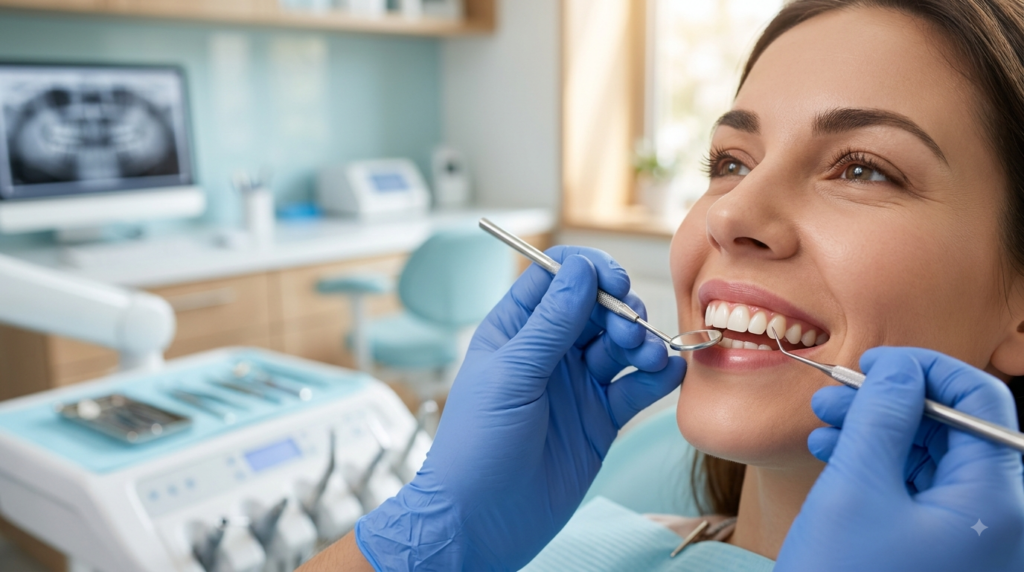
Ever wondered what your dentist sees the moment you open your mouth? While you may be focused on whether your teeth look white or straight, dentists are trained to spot subtle signs of oral health—and even clues about your overall health—within just a few seconds.
Here are 10 things your dentist notices right away during an exam.
- The Health of Your Gums
Healthy gums should be pink, firm, and fit snugly around your teeth. If your gums appear red, swollen, or bleed easily, it may be an early sign of gingivitis or gum disease.
Healthy gums are the foundation of a healthy smile, so this is often one of the first things your dentist checks.
- Plaque and Tartar Buildup
Even if you brush every day, plaque can build up in hard-to-reach places. If plaque isn’t removed, it hardens into tartar, which can only be cleaned by a dental professional.
Excess plaque and tartar increase the risk of cavities and gum disease.
- Signs of Tooth Decay
Dentists look for early signs of cavities, including:
- White spots on enamel
- Dark stains
- Soft areas
- Small holes or pits
Finding decay early often means simpler, less expensive treatment.
- Cracks, Chips, or Worn Teeth
Tiny cracks and chips may not cause pain immediately, but they can weaken your teeth over time.
Your dentist will also look for signs of teeth grinding (bruxism), which may include:
- Flattened chewing surfaces
- Worn enamel
- Small fractures
- Tooth sensitivity
- Your Bite and Tooth Alignment
The way your upper and lower teeth come together affects chewing, speaking, and overall oral health.
Misaligned teeth or bite issues can contribute to:
- Uneven tooth wear
- Jaw discomfort
- Headaches
- Difficulty cleaning between teeth
- Bad Breath Clues
Persistent bad breath isn’t always caused by food. It may indicate:
- Gum disease
- Tooth decay
- Dry mouth
- Poor oral hygiene
- Certain medical conditions
Your dentist can help identify the underlying cause and recommend the right treatment.
- Signs of Dry Mouth
Saliva plays an important role in protecting your teeth from decay.
A dry mouth may increase your risk of:
- Cavities
- Gum disease
- Bad breath
- Mouth discomfort
Your dentist may ask about medications or health conditions that could be contributing to reduced saliva.
- Changes in Your Tongue and Soft Tissues
Your dentist doesn’t just examine your teeth. They also check your:
- Tongue
- Cheeks
- Lips
- Roof of your mouth
- Floor of your mouth
They’re looking for sores, unusual patches, lumps, or other changes that may require further evaluation.
- Signs of Oral Cancer
During every routine dental exam, your dentist screens for signs of oral cancer. Early detection is extremely important because oral cancer is much easier to treat when found in its early stages.
They’ll look for:
- Persistent sores
- White or red patches
- Unusual lumps
- Areas that don’t heal
Most findings are harmless, but it’s always better to check.
- How Well You’re Caring for Your Teeth
Your mouth tells a story. Dentists can often tell whether you’re:
- Brushing regularly
- Flossing consistently
- Drinking sugary beverages frequently
- Grinding your teeth
- Smoking or using tobacco
The goal isn’t to judge—it’s to identify habits that may affect your oral health and provide personalized guidance to help you maintain a healthy smile.
Why Regular Dental Exams Matter
Many dental problems begin silently, without pain or noticeable symptoms. Routine dental checkups allow your dentist to detect issues early, often before they become more serious or require extensive treatment.
Preventive care can save you time, money, and discomfort in the long run.
Within seconds of looking in your mouth, your dentist gathers valuable information about your teeth, gums, and overall oral health. From spotting early cavities and gum disease to checking for oral cancer and signs of teeth grinding, every part of the exam plays an important role in protecting your smile.
Regular dental visits aren’t just about cleaning your teeth—they’re about catching problems early and helping you maintain a healthy smile for life. If it’s been more than six months since your last checkup, now is the perfect time to schedule an appointment.