
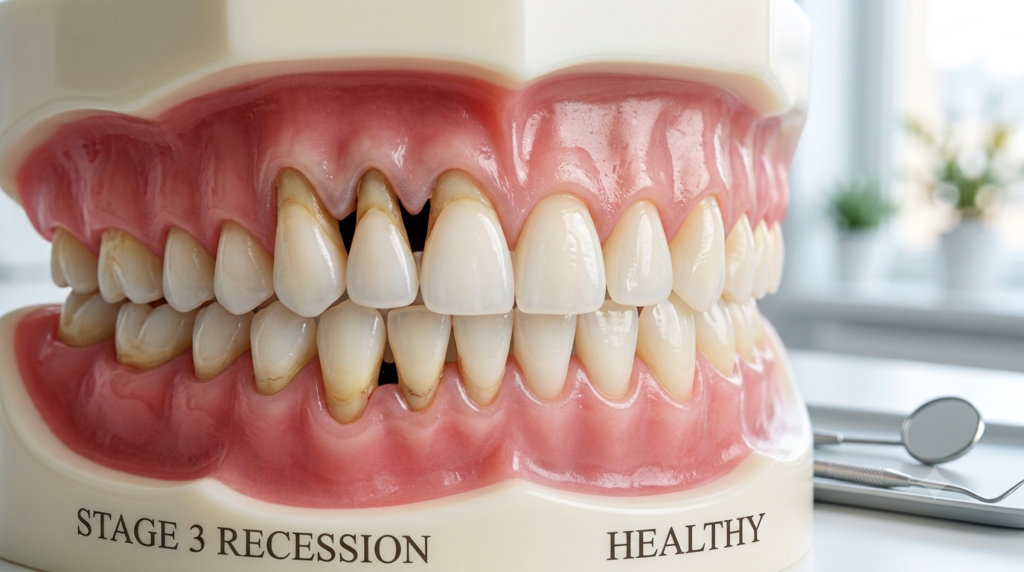
Have you noticed that your teeth look longer than they used to? Perhaps your teeth have become more sensitive while drinking cold water, or you can see a small part of the tooth near the gumline that was not visible before.
These changes may be signs of gum recession, a condition in which the gum tissue gradually pulls away from the teeth, exposing more of the tooth surface or its roots.
Gum recession can affect more than the appearance of your smile. It can also make your teeth more sensitive, increase the risk of root decay, and indicate an underlying gum health problem. Since the changes often happen gradually, many adults do not notice them until the symptoms become more obvious.
Understanding how gum recession affects your teeth can help you recognise the warning signs and seek appropriate dental care.
What Is Gum Recession?
Gum recession occurs when the gum tissue surrounding a tooth moves away from its usual position, exposing the tooth’s root surface. Unlike the crown of a tooth, which is covered by protective enamel, the root is covered by a thinner layer called cementum.
Once the root becomes exposed, it is more vulnerable to sensitivity, wear, and decay.
Gum recession may affect one tooth or several teeth. It can develop gradually and may not cause pain in the early stages. However, the exposed roots and changes in gum support can create both cosmetic and functional concerns.
5 Ways Gum Recession Changes Your Teeth
1. Your Teeth May Look Longer
One of the most noticeable effects of gum recession is the appearance of longer teeth. As the gumline moves downward on the upper teeth or upward on the lower teeth, more of the tooth surface becomes visible.
This can make your smile look uneven, particularly when recession affects only one or two teeth. You may also notice that the gumline no longer follows a consistent pattern across your smile.
In some cases, the exposed root has a slightly different colour or texture from the enamel, making the change more noticeable.
Why it matters: Changes in tooth length or gumline symmetry may indicate recession that deserves professional evaluation, even if you are not experiencing discomfort.
2. Your Teeth May Become More Sensitive
Have you started avoiding cold drinks or feeling a sudden, sharp sensation when brushing near the gumline?
Gum recession can expose dentin, the layer beneath the enamel. Dentin contains microscopic channels that connect to the inner parts of the tooth, making exposed areas more responsive to temperature changes, touch, and certain foods.
You may notice sensitivity when eating ice cream, drinking hot beverages, or brushing your teeth.
What can help: A dentist may recommend desensitising toothpaste, fluoride treatments, or other measures depending on the cause. Persistent sensitivity should be assessed to rule out cavities, cracks, and other dental problems.
3. Small Gaps May Appear Near the Gumline
As the gum tissue recedes, small spaces can develop between the teeth near their bases. These spaces may become more visible when you smile or look closely at your teeth.
Food particles may also become trapped in these areas, making cleaning more difficult. In some cases, the change reflects the loss of the small triangular gum tissue between neighbouring teeth, creating what are often called black triangles.
These spaces can affect the appearance of your smile and may contribute to plaque accumulation if they are difficult to clean.
Why it matters: New or increasing gaps around the teeth can be associated with gum recession or loss of the supporting tissues. A dental examination can help identify the cause and determine whether further treatment is needed.
4. Your Teeth May Feel Rough or Look Discoloured
Exposed root surfaces do not have the same protective enamel covering as the visible crowns of your teeth. As a result, they may appear slightly yellow or darker than the surrounding enamel.
The roots can also become more susceptible to surface wear and root decay. You may notice rough areas near the gumline or feel a change when running your tongue along the tooth.
Not every discoloured area indicates recession, however. Staining, tartar, and cavities can cause similar changes.
What can help: Your dentist can examine the affected area to determine whether it needs professional cleaning, preventive treatment, restoration, or another intervention.
5. Your Teeth May Feel Less Supported
Healthy gums and the underlying periodontal tissues help support your teeth. Gum recession may occur alongside periodontal disease, which can damage the tissues and bone that hold teeth in place.
If the supporting structures are affected, you may notice changes in the spacing of your teeth, discomfort while chewing, or increased tooth mobility.
It is important to understand that gum recession alone does not automatically mean a tooth is becoming loose. However, recession accompanied by mobility or changes in tooth position warrants prompt assessment.
Why it matters: Identifying gum disease early can help control inflammation and reduce the risk of further damage to the supporting structures.
What Causes Gum Recession?
Several factors can contribute to gum recession, including:
- Gum disease: Inflammation and damage to the tissues supporting the teeth can contribute to recession.
- Aggressive brushing: Brushing too forcefully or using a hard-bristled toothbrush may contribute to gum tissue damage.
- Genetics: Some people naturally have thinner gum tissue and may be more susceptible to recession.
- Teeth grinding: Excessive forces can contribute to dental problems and may complicate existing periodontal concerns.
- Tooth positioning: Teeth positioned outside the natural boundaries of the supporting bone may have a greater risk of recession.
- Tobacco use: Smoking and other tobacco products increase the risk of gum disease and can affect gum health.
Understanding the underlying cause is essential because treatment must address the contributing factors as well as the visible recession.
Can Gum Recession Be Reversed?
Gum tissue does not generally grow back on its own once it has receded. However, treatment can help control the underlying cause, protect exposed roots, and reduce sensitivity.
Depending on the severity, your dentist may recommend improved oral hygiene techniques, professional periodontal cleaning, desensitising treatments, or protective restorations for exposed root surfaces.
For suitable cases, a gum graft or another periodontal procedure may be considered to cover exposed roots and improve gum tissue thickness or appearance.
The appropriate treatment depends on the amount of recession, the condition of the supporting bone, your gum health, and your individual needs.
When Should You See a Dentist?
Consider scheduling a dental examination if your teeth appear longer, sensitivity persists, gaps develop near the gumline, or you notice bleeding, swelling, or changes in tooth stability.
Early assessment can help determine whether the recession is stable or progressing and whether an underlying gum condition needs treatment.
In the meantime, use a soft-bristled toothbrush, brush gently with fluoride toothpaste, and clean between your teeth daily. Avoid trying to scrub away exposed root surfaces, as aggressive brushing may worsen the problem.
Gum recession can gradually change the appearance of your smile and the way your teeth feel. From longer-looking teeth and increased sensitivity to visible gaps and exposed roots, the changes may seem minor at first but can signal an underlying oral health concern.
Although receded gums do not usually return to their original position naturally, appropriate treatment can help protect your teeth, manage sensitivity, and prevent further damage.
Noticing changes in your gumline or increased tooth sensitivity? Schedule a dental consultation to understand what is causing the recession and explore the most suitable treatment options. Taking action early can help protect your natural teeth and maintain a healthier, more confident smile.