
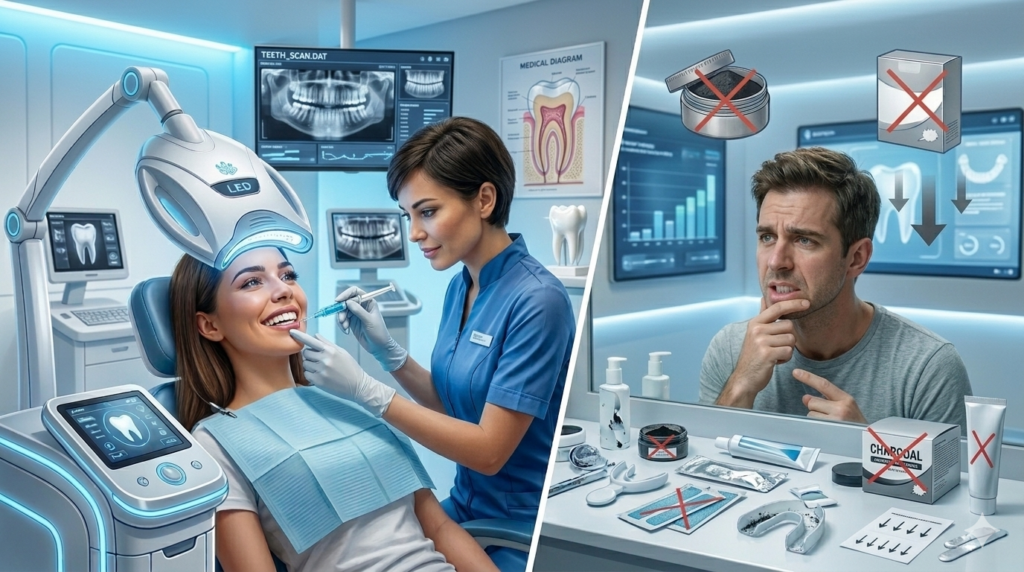
A bright, white smile has always been associated with confidence and good oral health. In 2026, teeth whitening has become one of the most popular cosmetic dental treatments, thanks to advanced technology and easy access to over-the-counter solutions. However, with so many products and trends available—from whitening strips to charcoal powders—it can be difficult to know what truly works and what doesn’t.
Understanding the most effective teeth whitening methods can help you achieve a brighter smile safely while avoiding treatments that may damage your teeth or waste your money.
Why Teeth Become Discolored
Before exploring whitening solutions, it’s important to understand why teeth lose their brightness. Tooth discoloration can occur due to several factors, including:
- Food and beverages: Coffee, tea, red wine, and dark sauces can stain enamel over time.
- Smoking or tobacco use: Nicotine and tar cause stubborn yellow or brown stains.
- Poor oral hygiene: Inadequate brushing and flossing allow plaque and stains to build up.
- Aging: Enamel naturally thins with age, revealing the darker dentin underneath.
- Certain medications: Some antibiotics or medical treatments may affect tooth color.
Fortunately, modern dental technology offers several effective ways to reverse or reduce these stains.
What Works for Teeth Whitening in 2026
Not all whitening solutions are created equal. The following methods are widely recommended by dental professionals because they are safe, effective, and backed by research.
- Professional In-Office Teeth Whitening
Professional teeth whitening remains the most effective and fastest method for achieving noticeable results.
Dentists now use advanced whitening systems that combine professional-grade bleaching agents with LED or laser technology. These treatments can brighten teeth by several shades in a single visit.
Benefits include:
- Immediate results
- Safe supervision by dental professionals
- Reduced risk of gum irritation
- Customized treatment based on your tooth sensitivity
For people seeking dramatic improvements quickly—such as before weddings, job interviews, or special events—this option remains the gold standard.
- Dentist-Supervised Take-Home Whitening Kits
Many dental clinics now offer custom take-home whitening kits designed specifically for each patient.
These kits include custom trays that fit perfectly over your teeth and professional whitening gel that is stronger than typical store-bought products.
Advantages:
- Professional-level results at home
- Gradual whitening with minimal sensitivity
- More even whitening compared to generic trays
In 2026, improved gel formulations have made these treatments more comfortable while still delivering strong results.
- Whitening Toothpastes with Safe Polishing Agents
Whitening toothpaste has evolved significantly in recent years. Many now contain safe polishing particles and mild whitening agents that help remove surface stains.
While these products won’t dramatically change your tooth color, they are effective for:
- Maintaining results after professional whitening
- Removing minor surface stains
- Supporting everyday oral hygiene
They are best used as part of a regular dental care routine rather than a standalone whitening solution.
What Doesn’t Work (or Isn’t Worth It)
With the rise of social media trends and DIY remedies, many whitening methods claim dramatic results but fail to deliver—or worse, damage your enamel.
Here are some approaches dentists generally advise against.
- Charcoal Toothpaste and Powders
Activated charcoal products gained popularity on social media, but most dentists do not recommend them for regular use.
Charcoal is abrasive and may gradually wear down enamel. Once enamel is damaged, it cannot regenerate, which can lead to sensitivity and even darker teeth over time.
- DIY Lemon, Baking Soda, or Vinegar Remedies
Natural remedies like lemon juice or vinegar are often promoted as quick whitening hacks. However, these acidic substances can erode enamel and harm your teeth.
While baking soda can remove some stains, frequent use without professional guidance may also damage enamel.
- Cheap Online Whitening Kits
Many low-cost whitening kits sold online promise instant results but contain weak formulas or poorly designed trays.
Common issues include:
- Uneven whitening
- Gum irritation
- Minimal results
Choosing products recommended by a dental professional is always safer and more effective.
Tips to Maintain Whiter Teeth
Whether you choose professional whitening or at-home treatments, maintaining your results is key. Here are some dentist-approved tips:
- Brush your teeth twice daily with fluoride toothpaste
- Floss daily to remove plaque between teeth
- Limit staining beverages like coffee, tea, and soda
- Use a straw when drinking dark liquids
- Schedule regular dental cleanings
- Avoid smoking or tobacco products
Good oral hygiene plays a major role in keeping your smile bright and healthy.
When to Talk to Your Dentist About Teeth Whitening
Not everyone is a good candidate for whitening treatments. If you have dental restorations like crowns or veneers, or if discoloration is caused by internal tooth issues, whitening may not produce the desired results.
A dentist can evaluate your teeth and recommend the safest and most effective option for your specific needs.
Professional guidance ensures you achieve a whiter smile without risking tooth sensitivity or enamel damage.
The Future of Teeth Whitening
By 2026, teeth whitening continues to evolve with innovations like low-sensitivity whitening gels, AI-guided shade matching, and improved LED technology. These advancements make treatments faster, safer, and more personalized than ever before.
However, despite all the new products and trends, the most reliable way to achieve noticeable results still involves professional dental care combined with good oral hygiene habits.
Teeth whitening can dramatically improve the appearance of your smile—but only when done correctly. Professional treatments and dentist-approved products offer the safest and most effective results, while DIY trends and untested remedies can do more harm than good.
If you’re considering teeth whitening, consult a dental professional to determine the best treatment plan for your smile. With the right approach, you can enjoy a brighter, healthier smile well into the future.